ADDIE
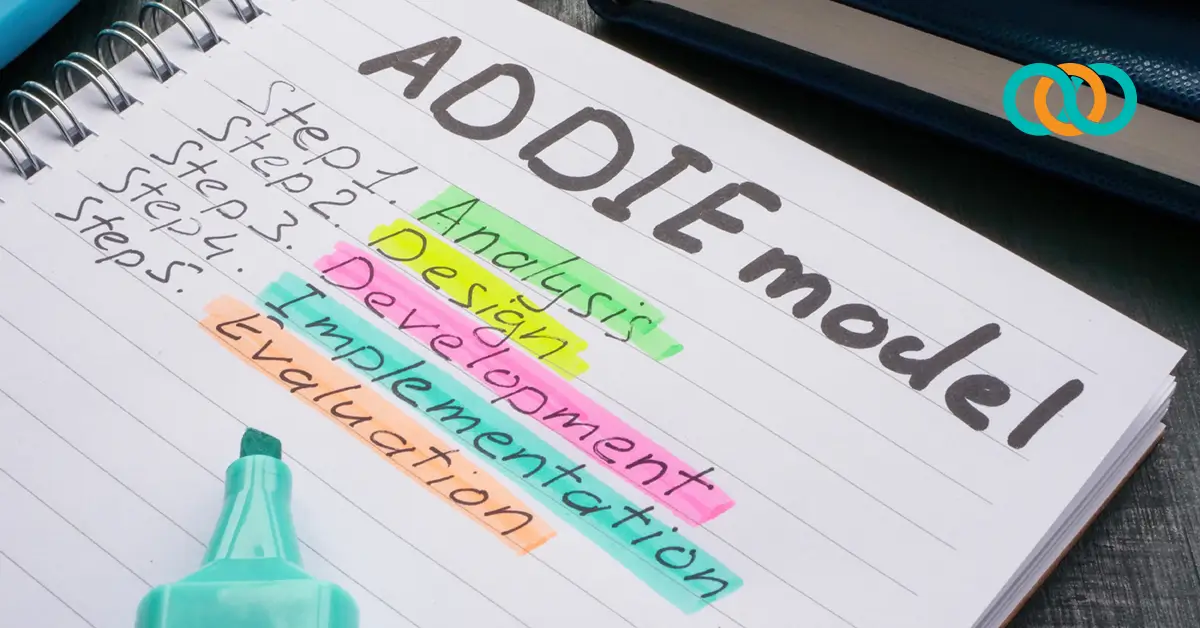
ADDIE is a widely used instructional design model that provides a structured framework for creating effective learning solutions. The name is an acronym for its five phases: Analysis, Design, Development, Implementation, and Evaluation.
The model was originally created in the 1970s at Florida State University for the U.S. Army, with the goal of standardizing the development of high-quality training programs. ADDIE was initially designed as a linear, step-by-step process, with each phase informing the next.
In practice, each phase serves a specific purpose:
- Analysis focuses on understanding the business problem, learner needs, performance gaps, and success criteria.
- Design outlines learning objectives, instructional strategies, assessments, and overall course structure.
- Development involves creating and assembling the learning materials, content, and media.
- Implementation delivers the training to learners and prepares facilitators, systems, and stakeholders.
- Evaluation measures the effectiveness of the learning and identifies opportunities for improvement.
While ADDIE is often described as linear, modern instructional design teams frequently apply it in a more iterative and flexible way, revisiting earlier phases as requirements evolve or feedback is gathered. Today, ADDIE is commonly blended with agile and rapid development approaches, making it adaptable for everything from large enterprise programs to fast-paced project work.
ADDIE remains popular because it provides clarity, consistency, and a shared language for stakeholders.
ADDIE vs. Agile Instructional Design
ADDIE provides a structured framework for designing learning solutions, while agile approaches emphasize speed, iteration, and continuous feedback. Many organizations use a hybrid approach, applying ADDIE as a foundation while working in shorter, iterative cycles.
See Also:
When you have more projects than people™, let TrainingPros provide you with the right consultant to start your project with confidence.

Articles Related to ADDIE:




Frequently Asked Questions About ADDIE:
1. What does ADDIE stand for?
ADDIE stands for Analysis, Design, Development, Implementation, and Evaluation—the five phases of the instructional design process.
2. What is the ADDIE model used for?
The ADDIE model is used to design and develop training programs, eLearning courses, and other learning experiences in a structured and effective way.
3. Is ADDIE still relevant today?
Yes. While it originated as a linear model, ADDIE is still widely used because it provides a clear framework. Most teams now apply it in a more flexible, iterative way alongside agile methods.
4. How is ADDIE different from agile instructional design?
ADDIE focuses on structured phases, while agile emphasizes rapid development and iteration. Many organizations combine both approaches to balance structure with speed.
5. What are the benefits of using ADDIE?
ADDIE helps ensure alignment between learning solutions and business goals, improves consistency, and provides a clear process for stakeholders and project teams.
6. Is ADDIE only used for eLearning?
No. ADDIE can be used to design any type of learning experience, including classroom training, virtual instructor-led training (VILT), blended learning, and performance support solutions.