Learner-Centered L&D in an Always-On World with Mary Pelusi of KPMG
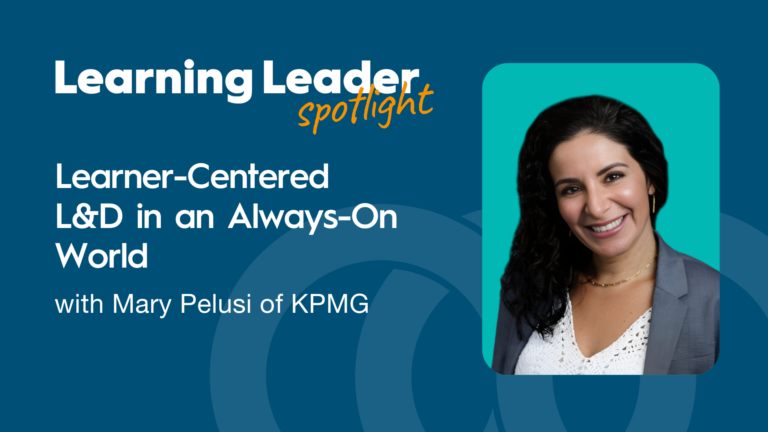
This episode of Learning Leader Spotlight explores how modern learning and development is evolving in an increasingly fast-paced, always-connected work environment. Through a lively and thoughtful conversation, Mary Pelusi of KPMG shares how AI, microlearning, and facilitator excellence are reshaping the learning experience. Her insights highlight both the technological shifts and the human-centered approach required to meet today’s learning expectations.
Mary Pelusi serves as a Director in Learning and Development at KPMG. With a career spanning client service, higher education, and L&D, she specializes in facilitator development and elevating presentation and communication skills across the organization. Her background brings a unique blend of investigative insight, academic experience, and corporate learning expertise.
Key Themes Discussed
1. AI as a Transformative Force in Learning and Development
AI has become a significant turning point for the L&D field. Mary explains that past advancements in tools like Captivate or Articulate were impactful but did not fundamentally change the entire learning ecosystem. Generative AI, in contrast, affects content creation, learner support, workflow efficiency, and facilitator preparation. At KPMG, AI tools now analyze documents, summarize complex materials, identify learner challenges, and help facilitators prepare with more precision.
AI assists facilitators before sessions by reviewing long facilitator guides and identifying areas where learners may struggle. It can also help facilitators brainstorm personal stories or anticipate audience questions. During sessions, AI supports real-time engagement by helping facilitators craft clear responses or generate prompts when energy levels drop. After sessions, facilitators use AI to analyze written evaluations, identify themes, and build targeted improvement plans for the next month. Although AI increases efficiency, Mary emphasizes that it does not replace the need for human skills such as reading the room, guiding conversations, and forming meaningful connections.
2. Microlearning as a Strategic Response to an Overloaded
Mary highlights microlearning as a central strategy for supporting learners in an environment filled with notifications, back-to-back meetings, and shrinking attention spans. Modern learners have limited time for long sessions, so brief, targeted learning experiences often create more impact. Examples at KPMG include quick software demonstrations, short guides on addressing client objections, and short storytelling skill videos. These learning resources fit naturally into the flow of work and support immediate application.
A notable example is the firm’s “Think Prompt Check” microlearning program. This required learning was designed to reinforce responsible AI use by encouraging professionals to pause, reflect, and apply human judgment before accepting AI outputs. The concise structure helped ensure wide adoption and clear understanding without requiring lengthy instruction. Mary sees microlearning as an essential component for organizations that aim to respect limited learner capacity while still addressing important capability needs.
3. Ethical and Responsible AI Use
The conversation includes an emphasis on the need for responsible AI adoption. While AI can accelerate work, Mary warns that it should not be used without thoughtful oversight. The “Think Prompt Check” framework encourages employees to question AI outputs, validate their accuracy, and ensure quality before applying the information. She notes that some organizations implement AI quickly without establishing review processes or guardrails, which increases the risk of errors and misplaced trust.
By embedding responsibility at the beginning rather than adding it later, organizations strengthen quality, reinforce trust, and prevent unintended consequences. Mary also acknowledges the cultural concerns that often accompany discussions about AI. She stresses that human judgment remains essential and that AI should support rather than control decisions.
4. The Shift Toward Experience-Oriented Facilitation
Mary provides a detailed perspective on the evolution of facilitation. She describes a shift away from lecture-based methods and toward approaches that encourage participation and shared discovery. She calls this experience orchestration. Facilitators today must design interactions that lead learners to their own insights rather than relying solely on the facilitator’s knowledge.
Effective facilitation involves mastery of the learning environment. In virtual spaces this includes navigating technology, managing breakout rooms, and ensuring engagement from participants who may feel distant. In person it requires inclusive activities, effective role plays, and discussions that allow everyone to contribute. Strategic questioning becomes a central skill because it prompts deeper thinking and supports learner-driven understanding. Storytelling is also important because it increases memory, relevance, and connection. Facilitators use their own stories and help learners share their experiences, which strengthens knowledge transfer and brings content to life. Psychological safety ties these components together by creating a climate in which people feel comfortable sharing, exploring, and asking questions.

Learning Trends Shaping the Future – What Learning Leaders See Coming Next
5. Leadership Anchored in Honest, Human-Centered Feedback
Mary reflects on the influence of mentorship throughout her career. She identifies her former boss as a model of leadership who balanced support and challenge. She publicly backed her team during difficult moments and delivered honest coaching in private. This combination of caring and candor helped Mary grow and shaped her own leadership philosophy.
She also discusses the importance of feedback that is clear and direct. Overly positive feedback can obscure opportunities for improvement and slow development. Honest guidance given respectfully strengthens both the individual and the team. This theme aligns with the broader message of the episode. Even with rapid technological change, human connection, clarity, and support remain essential elements of effective leadership and learning.
Practical Takeaways for L&D and Business Leaders
1. Treat AI as a Collaborative Assistant, Not a Replacement
Leaders can adopt AI tools to improve facilitator preparation, streamline content review, and support real-time problem solving. The goal is to allow AI to handle volume and complexity so humans can focus on connection, nuance, and interpersonal impact.
2. Design Training That Matches Real-World Time Constraints
Microlearning provides a practical way to deliver content that is concise, relevant, and easy to access. Leaders can offer short videos, guides, and targeted resources to help employees learn in moments that fit their schedule. This approach supports retention and allows learners to apply information quickly.
3. Build Guardrails for Responsible AI Adoption
Establish frameworks similar to “Think Prompt Check” to reinforce critical judgment and prevent overreliance on AI outputs. Embedding ethics and review processes early builds organizational trust and reduces risk.
10 Ways L&D Departments
Are Using AI in 2025
4. Foster a Culture of Supportive Accountability
Leaders can model the balance of care and candid feedback by supporting their teams while also challenging them when improvement is needed. Transparent communication helps employees grow and strengthens team performance. This approach aligns with the human-centered leadership values highlighted throughout the conversation.
Resources or Tools Mentioned
- Book: Applying AI in L&D by Josh Cavalier
- Book: Radical Candor by Kim Scott
- Professional Tool: Social Style Model / TRACOM Group resources
- Learning Platform: LinkedIn Learning
- Industry Source: Training Magazine
Closing Reflection
This conversation reinforces that the future of learning is both technology-enabled and deeply human. Success lies in pairing emerging tools with responsible practice, human-centered design, and skilled facilitation. As work continues to accelerate, the organizations that balance innovation with empathy will be best positioned to support growth and capability across their workforce.
Ready to Work with Us?
Does your L&D team have more projects than people? TrainingPros has been named a Top 20 Staffing Company internationally by Training Industry, and recognized as a Smartchoice® Preferred Provider by Brandon Hall Group for 2025. We’re also proud to be named a Champion of Learning by the Association for Talent Development (ATD)—an international honor that reflects our dedication to excellence in corporate learning. These accolades underscore TrainingPros’ unwavering commitment to delivering high-quality, tailored training solutions.
If your projects need instructional design consultants, eLearning developers, or other learning & development consultants for your custom content projects, reach out to one of our industry-expert relationship managers today.
When you have more projects than people™, let TrainingPros find the right consultant to start your project with confidence. Schedule a consultation today.